I go to therapy. Partly because I think it’s good practice for someone who works on the deeper levels of the psyche with other people. It keeps me grounded, reveals my blind spots and keeps me honest about my own process.
But what a soul-destroying experience conventional therapy can be.
When I meet a therapist who can think beyond acronyms (ADHD, BPD, whatever diagnostic flavour of the month), who engages with the actual person sitting across from them rather than sorting me into pre-fabricated categories—it’s fantastic. Warm. Engagingly difficult in exactly the right way.
The Horrors of the Label
Why are so many therapists so relentlessly negative? What are they getting out of meeting someone for less than an hour and then telling them who they are? And it’s always pathologized. Always a label. Always what’s wrong with you, never what’s alive in you.
Of course, you can say that is clients/patients, we submit to this paradigm by turning up at the appointment. It’s rarely forced upon us. What interests me is what’s missing in what’s in this encounter.
Fred has been alive a long time
Consider Fred, who’s just turned 50 and feels lost, fearful, dissatisfied. He’s been alive for roughly 438,000 hours. A psychologist assesses him in 55 minutes—0.00023% of his life. Yes, Fred wants professional perspective on his difficulties. But the absurdity remains: this person, after one hour, claims authority to tell him who he is.
What Might Lacan, the Beloved the Psychoanalyst of Postmodern Age Say?
Jacques Lacan was a French psychoanalyst (1901-1981) who revolutionized psychoanalytic theory by integrating linguistics and philosophy, arguing that the unconscious is structured like a language and that our sense of self is fundamentally shaped by symbolic systems outside ourselves.
Lacan on the Master Signifier
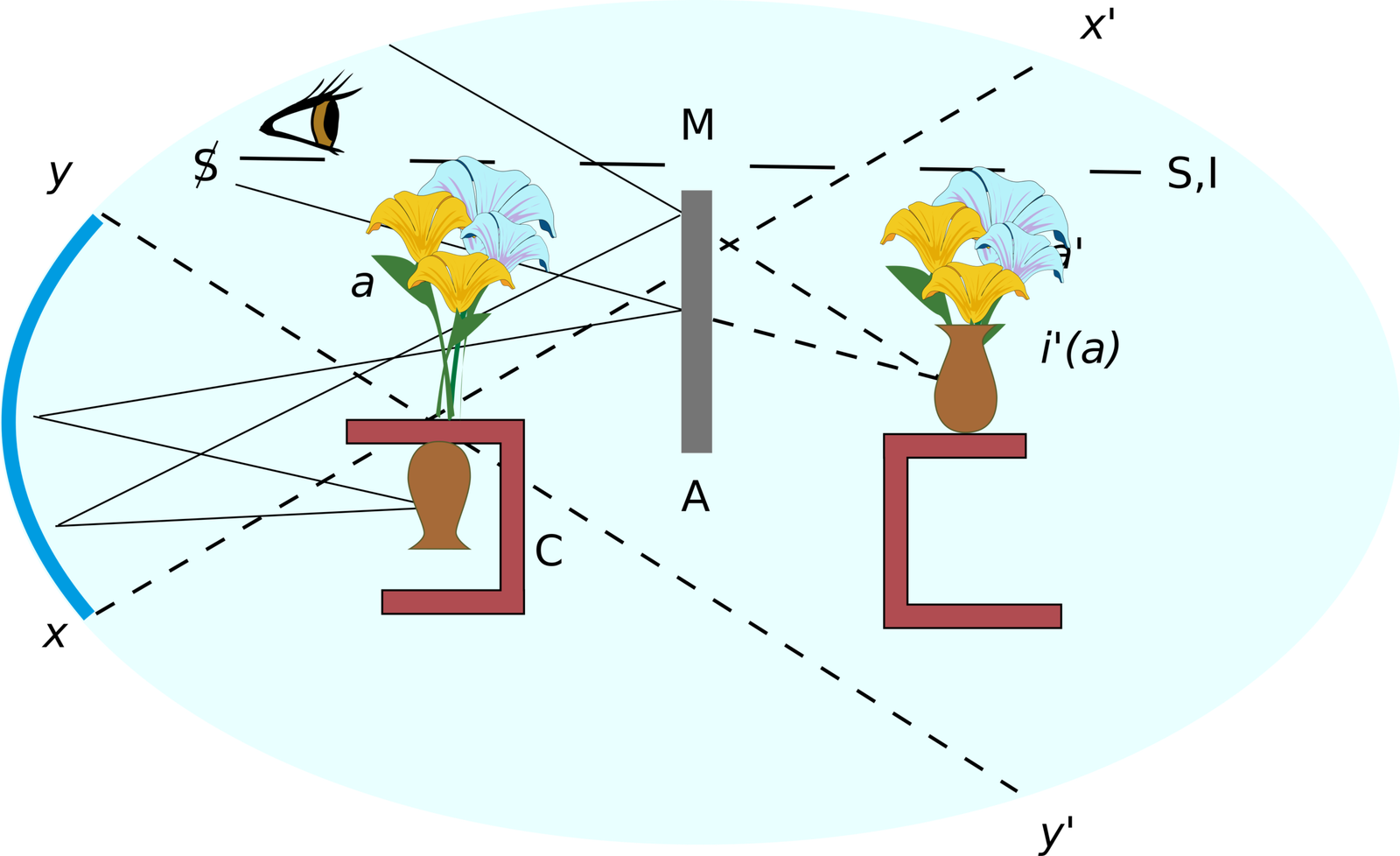
For Lacan, the act of naming—of assigning a diagnostic label—is never neutral. It’s the assertion of the symbolic order over the subject’s lived experience. The label becomes what Lacan called a “master signifier” (S1), a privileged term that organizes all other meanings around it, foreclosing alternate interpretations.
Once you’re labelled “GAD (generalised anxiety disorder)” or “ADHD” or “depressive”, everything you do gets read through that lens. Your anger becomes “dysregulation.” Your enthusiasm intensity becomes “mania”: When you burst into laughter at the absurdities of life, you are “avoidant” (and probably manic as well if you have a loud, spontaneous laugh).
Any legitimate response to an invalidating environment becomes “pathology” which needs to be labelled and cured.
Trauma as a master signifier
Consider how trauma functions as a contemporary master signifier: once your experience is coded as “trauma”, everything is reorganised around that term. Your relationship difficulties become “trauma responses”, your boundaries become “trauma-informed”, your nervous system reactions become “trauma activation”.
The term isn’t wrong — trauma is real — but as a master signifier, it can foreclose other ways of understanding your experience: family dynamics, economics, systemic oppression, existential anxiety, creative struggle, spiritual crisis. Everything becomes legible only through the trauma lens.
The label doesn’t so much describe you as redefines you as a particular kind of subject within therapeutic discourse. And crucially, it locates the AUTHORITY to interpret your experience outside yourself, in the supposed expertise of the Other (the therapist, the diagnostic manual, the psychiatric establishment).
Lacan would call this “subjection to the symbolic” — you become legible only through categories that weren’t designed to capture your singularity but to make you manageable, treatable, billable.
When Your Reality is Irrelevant
What’s devastating about the bog-standard therapeutic encounter is its precise replication of a very early wound.
“How you feel is irrelevant. What you see and say about yourself is irrelevant. I am the arbiter of your experience, not you. Don’t get any ideas above your station because I will crush them. The authority belongs to me, and you must get in line or face rejection, poverty, loneliness.”
This is the wound of fundamental invalidation. When a child’s subjective experience is systematically dismissed or overridden by caregivers who position themselves as the authority on what the child is actually feeling.
The failure of Mirroring According to DW Winnicott
British psychoanalyst, D.W. Winnicott, described how an infant develops a sense of self by seeing themselves reflected in the mother’s face. When the mother looks at the baby with recognition, attunement, and responsiveness, the baby learns:
“I exist. What I feel matters. I am real.”When this mirroring fails—when the mother’s face reflects only her own preoccupations, moods, or interpretations—the child learns to monitor the mother’s state rather than their own. The child’s subjective experience becomes subordinate to the Other’s needs and interpretations.
You’re not upset, you’re over-sensitive. I wasn’t being mean, you just can’t take a joke You don’t really want that, you’re just being greedy/demanding. Sometimes, the second clause is undoubtedly valid and appropriate. Winnicott is refering to chronic dismissal of the child’s inner experience, preferences and self-expression.This creates what he called a false self — an adaptive persona constructed to survive in an environment where authentic self-expression is too dangerous. The child learns: My version of reality doesn’t count. I must defer to the Other’s interpretation to maintain connection.
PS: to all caregivers, Winnicott also developed the concept of the “good enough mother” as he (!!) knew that no caregiver is ever going to do this 100% of the time. As long as it’s enough, the child thrives, the caregiver too, and all is reasonably OK.