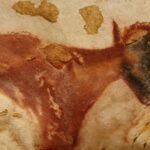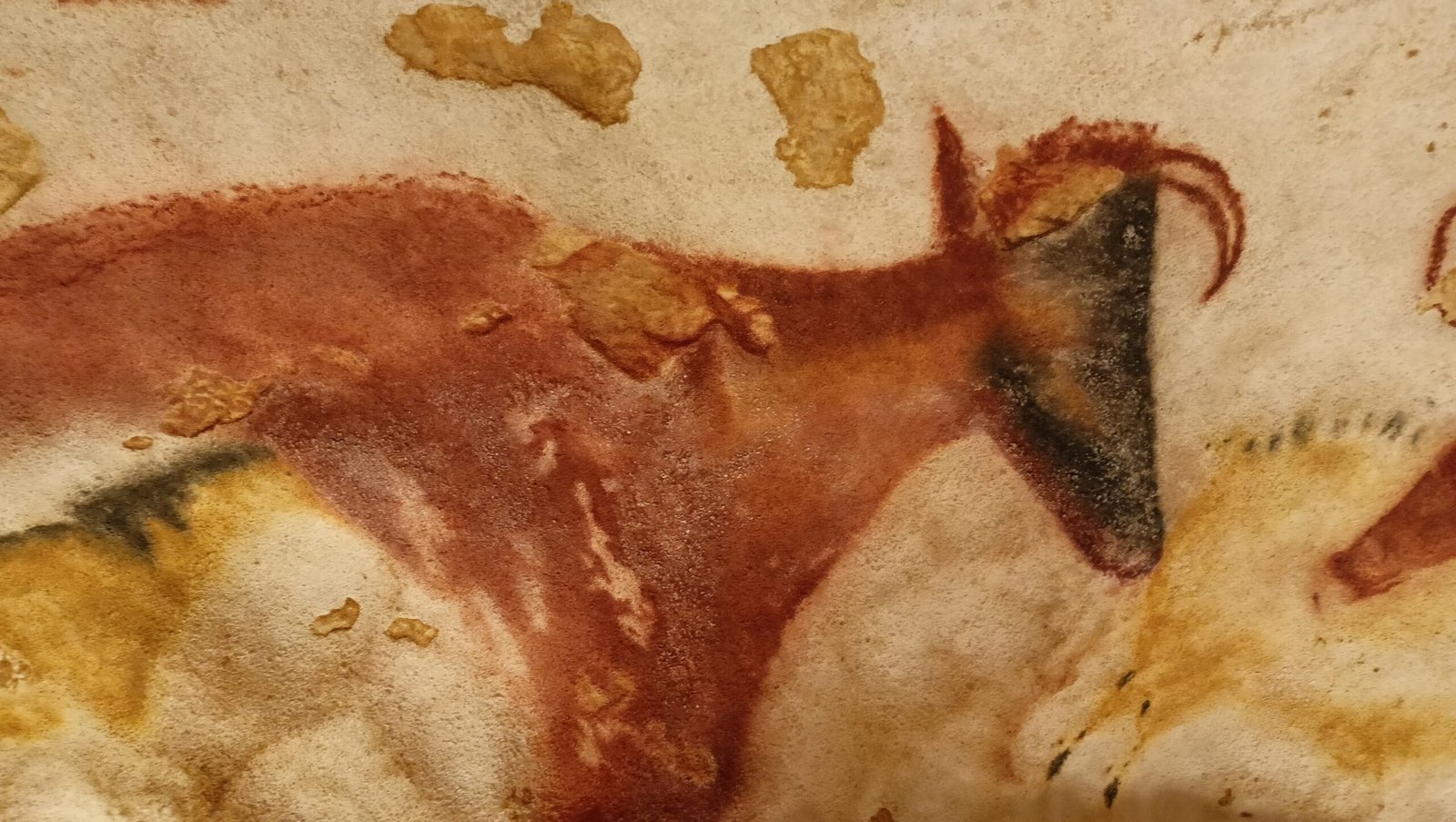
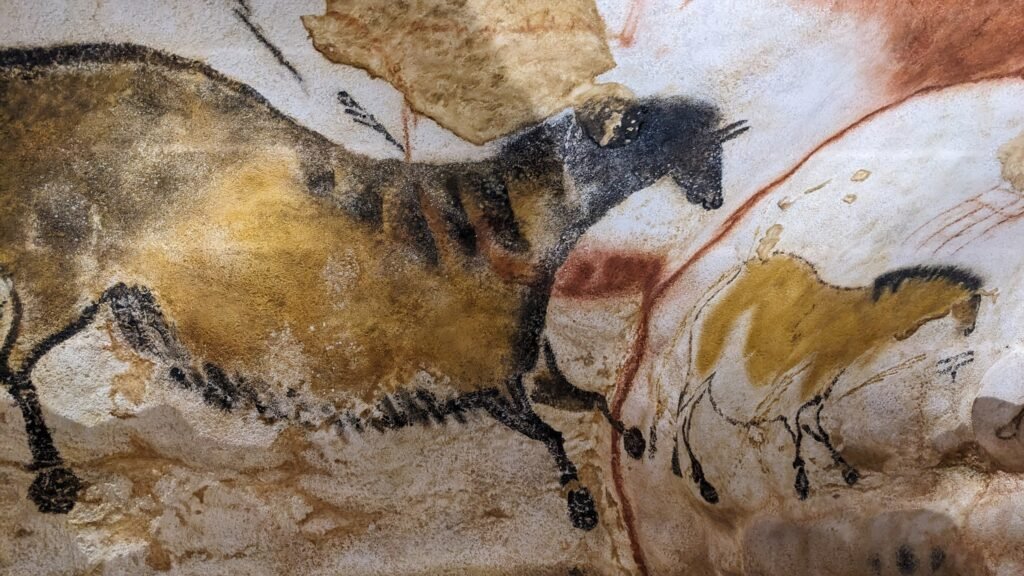
These are the Lascaux cave paintings.
Nobody knows exactly why they were made. That’s where this project starts.
Last night an old friend messaged me. We hadn’t spoken in a while — the last time it felt more like an ambush. He insulted my work and told me all about his wife’s family wealth and how it was coming his way. It was more like a press release than a conversation. This time he messaged asking if I would show his son around Berlin. No sign of a “Please” or “if you have time”, just the demand. Sally, be good!
I wanted to tell him how that last conversation had felt, to give him the full account, to make him understand. I wanted to punish him for being so disappointing, and I was busy composing my elegant take-down in my head, aiming for maximum impact.
The message has to reach its destination
And then, there it was
Everything I was about to write was in service of a concept — someone who has been wronged — and sending it would have made that concept stronger. I would have felt more wronged, not less, and I’d have added embarrassment into the mix.
There would have been no catharsis or relief. Just the fantasy that performing the mistreatment loudly enough might finally make someone understand.
It’s exhausting and it never works. The performance lands nowhere, and you’re left more identified with the pain than before you started, plus, feeling a bit stupid. Yes, he behaved like a d**k, but still. Is any of this necessary?
The message’s destination is the origin.
Because the picture I had in mind while planning my truth-telling, my revenge script was him, not me.
And it was me playing the role of a you.
The you who had been wronged.
And the you that needed to settle that score.
… self as subject — the one who is having this experience — rather than the self as object to be improved … or witnessed.
Was I there? No, not really. Does it matter?
Yes, it does. It really does.

You may as well sit in a glass house and throwing rocks at the ceiling.
But what has any of this got to do with the paintings in the cave?
The looping into nowhere
This is the loop the Analogue Project exists to interrupt.
Not by “regulation” so that you can make your brain, body and nervous system behave better. Not by controlling pesky bad thinking. And not even through reframing or journalling or any of the thousand techniques that keep you focused on the project of me as object, as thing to be bettered — because that is precisely the wrong direction.
The more carefully I tended that project, the further I got from what I’ve actually been looking for. Maybe I need to push harder — but I tried that already.
What we’re looking for isn’t a better self. It’s contact with the self as subject — the one who is having this experience — rather than the self as object to be improved, defended, explained, or witnessed.
Drawing does something strange and useful here.
When you draw what you actually see — not what you know is there, not the symbol for nose or chair or hand, but the actual light and edge and shadow your eyes are receiving right now — the managing, narrating self goes quiet. Not through effort but through attention directed somewhere specific.
A question of attention, subtle and essential
Wide attention, Marion Milner called it. The opposite of the focused, goal-directed attention that keeps us locked in the loop, where everything must be done because it’s good for us or good for something. If it hasn’t got a purpose, justifying doing it has become oddly problematic for many of us.
In that state something shifts. You stop being the object of your own story and become, briefly, the subject of your own experience.
I would bet everything I have that the people who drew in those caves were not trying to improve themselves or “be creative” because they had heard it would make them happy and live longer. I would speculate that they drew them just because they could.
The Analogue Project uses drawing — doodling, mind-mapping, scribbling or sketching — writing by hand, and other real-world practices to experiment with attention. The framework draws on Lisa Feldman Barrett’s work on how the brain constructs experience, and on Jung and Marion Milner for what that construction makes possible and what lies beyond it.
But the theory is scaffolding. The cave paintings are the point.