The resistance you feel at the prospect of picking up the pencil and sitting down to sketch a tree (or anything else) feels like a reaction. It feels like the response is triggered by the prospect of drawing – or more specifically – of not drawing even though though want to, is “triggered”.
But according to neuroscientsist, pschologist and author, Lisa Feldman Barrett, our perception is back-to-front: we’re not reacting, we’re predicting. We’re not reacting to drawing (or making a sales call, or going on a date or anything else), we’re predicting what it will be like. What we predict is rendered as a feeling or mood.
“Your brain doesn’t react to the world — it predicts in advance how to act and what to experience in the next moment.”
Barrett, The ‘Fight or Flight’ Idea Misses the Beauty of What the Brain Really Does
By the time you’ve detetcted the tiredness, the sudden awareness of more urgent things to do, the simulation has already run and completed and you have no idea what happened, what mechaniam lead to doing something else.
Here’s the part that stings:
“You feel what your brain believes.”
Barrett, How Emotions are Made: The Secret Life of the Brain
You cannot argue your way out of a prediction. You cannot use insight because by the time you’ve seen it, it’s too late and insight does nothing to change future predictions. The only thing that updates what your brain predicts is new data — an actual experience the brain didn’t anticipate.
“Your actions today become your brain’s predictions for tomorrow.”
Barrett, Seven and a Half Lessons About the Brain
I’ve been reading Barrett’s work for years, struggling to grasp how to put it into practice. Barrett is a rigorous scientist, and I have no science background — but the creativity and flexibility of her model felt so true and useful that I kept working at it. I had a hunch that I could find a way to apply it that would sidestep the well-worn strategies of pushing harder and being more disciplined – the ones that have left me utterly defeated.
It’s a complex theory but it’s simple to test. Just try it once. Do the thing. Briefly. Find out what actually happens.
An accident and it all fell into place
Then came a breakthrough in my understanding. I was run over while walking down a quiet country lane — the driver came off the road and hit me from behind.
I live in the middle of Berlin. For months after the accident, I would panic in the street whenever a delivery bike or scooter came up behind me. Even a child on a bike could freak me out. The traditional narrative would be that these events were triggering the trauma — the memory of the accident. Even though the context was wholly different, city vs countryside, bike vs car.
When I panicked watching a tram pull into its stop, it hit me: I am not remembering. I am predicting. Any moving vehicle near a vulnerable human body was enough.
The accident had primed me to anticipate danger — but the panic wasn’t being caused by a traumatic memory resurfacing. It was a prediction that something terrible was about to happen.
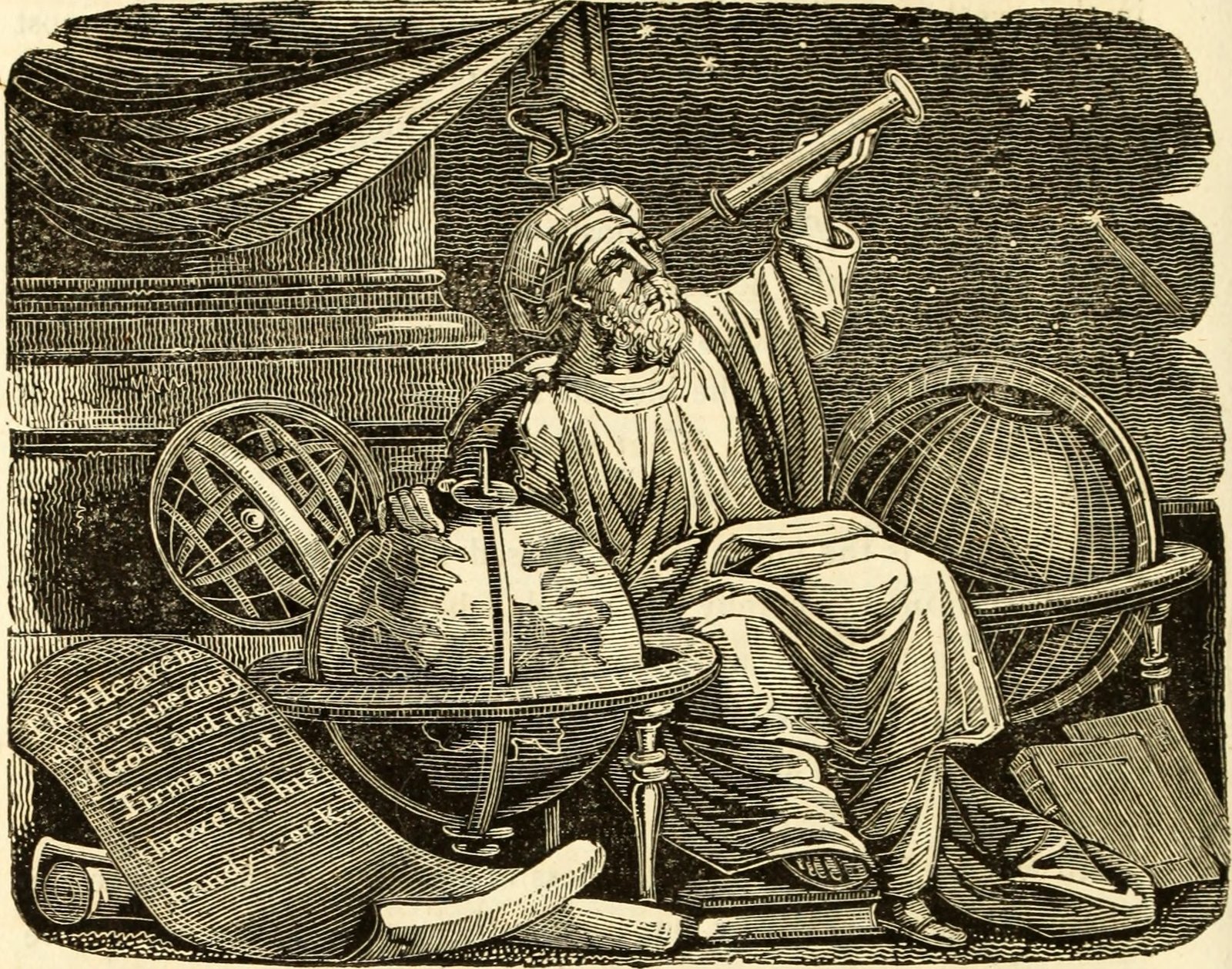
Image: The astrologer of the nineteenth century, 1825, Raphael, pseud., 1795-1832 Internet Archive Book Images, No restrictions, via Wikimedia Commons